Best Plumber Website Design: What Works in 2026
Plumber website design has to do more than make a plumbing business look professional.
It needs to show what services you offer, explain where you work, help people trust your company, and make it easy for someone to request help. For plumbers in Maine and New England, your website often becomes the first serious trust check. A homeowner may search for help with a leaking pipe, clogged drain, water heater issue, sump pump problem, bathroom plumbing project, or emergency plumbing need. A business owner may need maintenance, repairs, fixture installation, or plumbing support for a larger project.
Before they call, many people will check your website. If the site feels thin, outdated, unclear, or hard to use on a phone, that lead can move on quietly. This guide covers what works for plumber websites in 2026, especially for plumbing contractors, residential plumbers, commercial plumbers, and local service businesses. It also explains how our Out-Of-The-Box plumber specialized website design gives businesses a stronger starting point without requiring a full custom build.
Why Plumber Websites Need More Than a Basic Homepage
A basic plumber website usually includes a logo, a short company description, a phone number, and a list of services. That may confirm the business exists, but it usually does not do enough to generate consistent service calls or project inquiries. Before someone contacts a plumber, they often want answers to practical questions.
Do you handle residential plumbing, commercial plumbing, or both?
Do you offer the service I need?
Do you work in my town or region?
Can I call for urgent plumbing issues?
Do you handle water heaters, drain cleaning, fixture installs, leaks, remodel plumbing, or larger projects?
Do you seem established and trustworthy?
What happens after I contact you?
How do I request service?
Plumbing work often comes with stress. A customer may be dealing with water damage, a backed-up drain, no hot water, a broken fixture, or an issue they do not fully understand. A vague website does not help them feel confident. Plumbers also deal with repeat questions. People ask about service areas, appointment requests, emergency calls, estimates, water heater options, drain issues, availability, and whether the company handles small repairs or larger installs.
A stronger website can answer many of those questions before the first call. Referrals and Google Business Profile listings still matter. The website gives people a place to confirm your services, see your credibility, and take the next step. Your site should support how your plumbing business actually works day to day.
What Works in Plumber Website Design in 2026
-
The homepage needs to explain who you are, what you do, and where you work within the first few seconds. For a plumber, this means being clear about your service mix. If you handle residential plumbing, commercial plumbing, drain cleaning, leak repair, water heaters, sump pumps, fixture installs, bathroom plumbing, kitchen plumbing, remodel plumbing, or emergency plumbing, visitors should not have to guess.
The homepage also needs clear local context. You do not need to force every town name into the first paragraph. You do need to make your service area clear enough that a visitor knows whether they are in the right place. A strong homepage message helps the right customers stay on the site and helps filter out poor-fit inquiries.
-
A plumber website needs a clean overview of core services. This section should give visitors a quick snapshot of what the business offers. From there, each service should link to its own dedicated service page for more detail.
This matters because plumbing customers often search with a specific problem in mind. Someone looking for drain cleaning has a different need than someone searching for a water heater replacement, leak repair, toilet installation, sump pump service, or commercial plumbing support. A service overview helps people move quickly to the information that matches their need.
-
Each major plumbing service should have its own page. For plumbers, dedicated service pages can cover work such as:
Residential plumbing services
Commercial plumbing services
Emergency plumbing
Drain cleaning
Leak repair
Water heater installation and replacement
Sump pump service
Toilet repair and installation
Faucet and sink repair
Garbage disposal repair
Bathroom plumbing
Kitchen plumbing
Remodel plumbing
Pipe repair and replacement
Each service page should explain the work, answer common questions, include relevant photos when possible, and make the next step clear. This structure helps visitors and search engines understand what your business offers. A single general services page usually cannot do that as well as clear service-specific pages.
For plumbing contractors, this matters because the term “plumber” can cover many different jobs. Dedicated service pages add clarity.
-
A plumber website should make the next step obvious. A visitor may be ready to request service, ask about a plumbing issue, schedule an estimate, or contact the business with a more urgent problem. The website should make that easy.
Strong calls to action for plumber websites may include:
Request Service
Ask About Plumbing Work
Schedule Plumbing Service
Request an Estimate
Contact Us Today
Get Help With Your Plumbing Issue
These CTAs should appear throughout the homepage, service pages, gallery, and contact page. A visitor should never need to hunt for a way to reach out.
-
Trust matters when someone hires a plumber. People want to know whether your business communicates clearly, responds quickly, explains the work, respects the home or jobsite, and solves the issue properly.
Testimonials help answer those concerns. A testimonial section on the homepage gives visitors quick social proof. You can also add relevant testimonials to service pages when they match the type of work being discussed.
The best testimonials are specific. They mention the service, the customer experience, the communication, the finished result, or why the customer would call the plumber again.
-
A plumber website can benefit from project photos, even if plumbing work is often behind walls, under sinks, or in basements. A gallery helps show the kind of work your business handles. It can include water heater installs, bathroom plumbing, kitchen plumbing, sump pumps, mechanical rooms, commercial plumbing, remodel plumbing, fixture installs, and before-and-after examples.
Clear work photos help visitors see that the business is active and capable. They also help separate your company from plumbers whose websites feel empty or generic. The photos do not need to look overly staged. They need to be clear, organized, and relevant to the services you want more customers to ask about.
-
Many customers hesitate because they do not know what happens after they contact a plumber. A process section makes your business feel easier to work with.
For a plumber, a simple process may include:
Initial service request
Issue or project review
Estimate or scheduling
Plumbing work and follow-up
This helps people understand what to expect. It also shows that your company has a clear process for handling inquiries. For plumbing contractors who handle larger jobs, this section can help explain how estimates, project planning, scheduling, and installation work. For service-focused plumbers, it can help customers understand how to request help and what information to provide.
-
The About page should do more than say the company provides quality plumbing work. For a local plumber, this page helps potential customers understand who they are contacting. It should include company background, team details, service area context, business location information, and direct contact options.
This page should make the business feel established, reachable, and real. People want to feel comfortable before hiring someone to work inside their home or business. A strong About page helps build that comfort.
-
Local visibility matters for plumbers. Service area pages help explain where your business works. They can also support search visibility for nearby towns and regions when written properly.
The key is to make these pages useful. They should explain the plumbing services available in that area, the kind of customers you serve, and how someone can request help. They should not be overloaded with repeated keywords or copied town-by-town text.
For plumbers and plumbing contractors, local visibility can directly affect inquiry volume. If people cannot find you when they search for plumbing help nearby, they may never know your business exists.
-
A complete plumber website needs more than a homepage and service pages.
An FAQ page can answer common questions about service calls, estimates, emergency availability, drain cleaning, water heaters, sump pumps, leak repair, scheduling, and service areas.
A careers page helps growing plumbing companies recruit apprentices, licensed plumbers, service technicians, office staff, or other team members.
A blog gives the business a place to publish helpful content, project updates, seasonal plumbing advice, service-specific articles, and local SEO content.
A full contact page with a lead capture form helps collect better inquiries. Instead of receiving vague messages, the form can ask for service type, location, urgency, project details, and contact information.
Together, these pages help the website support service calls, larger project inquiries, hiring, local visibility, and long-term marketing.
The Problem With Generic Plumber Website Templates
Generic website templates can look clean, but they usually are not built around how plumbers earn trust and generate service inquiries. A nice-looking page does not automatically explain your plumbing services, organize your service areas, answer customer questions, show work examples, or guide visitors toward a request. The business owner still has to figure out the page structure, copy, photos, CTAs, service pages, contact flow, and ongoing updates.
That is where many plumber websites stall. A generic template may give you a visual starting point, but it usually does not give you a dedicated service page strategy, service area page structure, plumbing service inquiry flow, work gallery planning, trust-focused About page, FAQ structure, careers page, blog setup, or ongoing support after launch. A plumber website can look polished and still fail to bring in serious calls or project inquiries. The structure behind the design matters.
Our Out-Of-The-Box Plumber Specialized Website Design Solves This
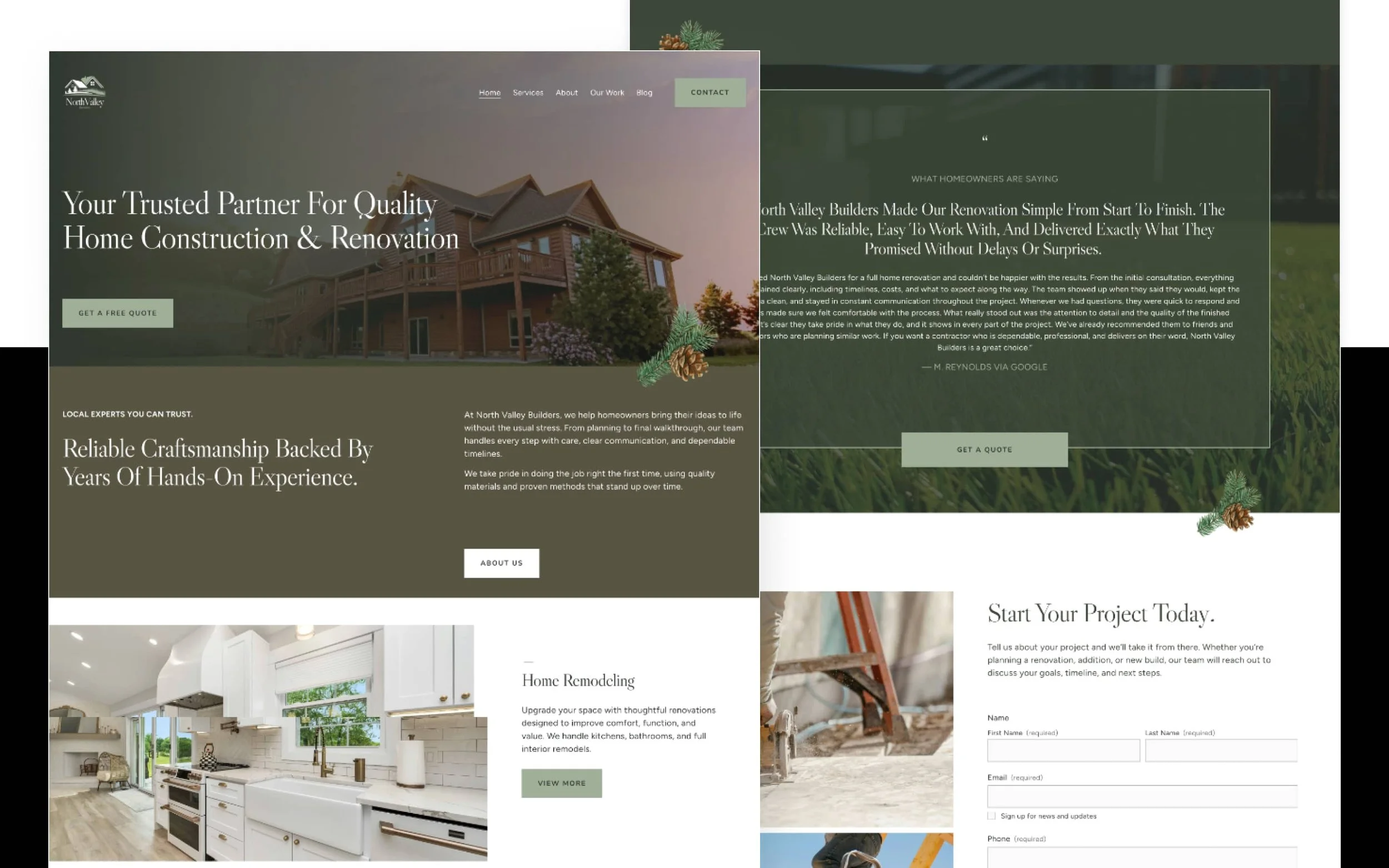
Our Out-Of-The-Box plumber specialized website design is built for plumbers, plumbing contractors, residential plumbing companies, commercial plumbers, and local service businesses that need a professional website without starting from scratch. The homepage is structured to make a strong first impression quickly. It gives visitors a clear introduction to the company, explains the main plumbing services offered, shows where the business works, and points people toward the next step.
Instead of making visitors search for basic information, the homepage brings the most useful pieces forward: service overviews, customer testimonials, a simple four-step process, project or work images, contact options, and clear calls to action throughout the page. This structure helps potential customers understand the business faster. They can see what kind of plumbing work you do, what your process looks like, where you work, and how to reach out when they are ready.
The specialized design also includes dedicated service pages built for SEO and lead generation. Each core service gets its own page with detailed service information, project images, and clear calls to action. This gives every major service room to stand on its own instead of forcing visitors to sort through one broad services page. That matters for both search visibility and conversions. A visitor looking for water heater replacement should be able to land on a page about water heaters. A homeowner looking for drain cleaning should find a page that speaks directly to drain issues. A business owner looking for commercial plumbing support should not have to dig through residential service copy.
The About page is built around trust. For plumbers, this page can carry a lot of weight because people want to know who they are contacting before they invite someone into their home, business, basement, mechanical room, or jobsite. The page includes company information, team details, service area references, business location information, and direct phone and email access.
The service area structure is another major part of the design. Plumbers often depend on local visibility, and dedicated service area pages help support searches tied to nearby towns and regions. These pages are designed to be useful for real customers while still giving search engines clear location context.
The site also includes an FAQ page, careers page, Our Work gallery, blog setup, and a full contact page with a lead capture form. Together, these pages create a plumber website that supports credibility, local SEO, hiring, service inquiries, larger project leads, and long-term marketing.
What You Get With the Out-Of-The-Box Package
The value of the Out-Of-The-Box package is that you are not starting from a blank screen and you are not left to manage the website alone. You get an industry-specific specialized website design built around the way plumbers get found, earn trust, explain services, and receive inquiries. The package includes professional setup, mobile-friendly design, planned page structure, launch support, and ongoing website support after the site goes live.
For many plumbers, this is a better fit than DIY because the strategy is already built into the structure. It is also faster and more cost-conscious than a full custom website project. Your plumber website will need regular care after launch, and that is part of why the Out-Of-The-Box package is built around ongoing support. We can help update service information, add new work photos, adjust service areas, post hiring updates, make content changes, and keep the site aligned with how your business is growing. Instead of handing you a website and leaving you to figure out every update on your own, we stay involved as your long-term website partner.
Is This Specialized Design Right for Your Plumbing Business?
The Out-Of-The-Box plumber specialized website design is a good fit if:
You need a professional website soon
You want something stronger than a DIY site
You want service pages planned clearly
You need your plumbing services explained better
You want better local search structure
You want a clear inquiry path
You do not want to manage every update alone
You want support after launch
It may not be the right fit if:
You need a fully custom brand and website strategy
You need advanced integrations
You need complex eCommerce features
You have a large content-heavy site
You want to build and maintain everything yourself
You need unusual functionality outside the design scope
For plumbers who need a clean, practical, professionally built website with ongoing support, Out-Of-The-Box Web Design is likely the better path.
For businesses that need a fully custom experience, our Custom Web Design package is the better fit.
Plumber Website Design Should Help People Trust You Faster
The best plumber website design in 2026 gives potential customers the information they need before they call. Every page should serve a clear purpose, whether it explains a service, shows completed work, answers a common question, or helps someone send an inquiry.
A strong plumber website should show your services, explain your process, support local search, answer common questions, build trust, and make it easy for people to request help. For plumbers, plumbing contractors, and local service companies, that structure can make the difference between a visitor leaving quietly and a customer reaching out about real work.
If you run a plumbing business in Maine or New England, your website should help people trust your company before they ever pick up the phone. Our Out-Of-The-Box plumber specialized website design gives you the structure most plumber websites need: service pages, service area pages, work galleries, testimonials, process sections, FAQs, contact forms, and ongoing support after launch.
FAQ
-
A plumber website should include a clear homepage, service overview, dedicated service pages, testimonials, process section, work gallery, About page, FAQ page, service area pages, and a contact form. These pieces help visitors understand your services and request help.
-
The best plumber website design for local lead generation includes service-specific pages, service area pages, clear calls to action, customer testimonials, work photos, and a contact form that collects useful details from potential customers.
-
A generic website template usually gives you a layout. Plumber website design needs a structure built around plumbing services, local search, customer trust, service requests, work examples, and ongoing website support.
-
Yes. Plumbers should have separate pages for major services when possible. This helps visitors find the exact information they need and helps search engines better understand what the business offers.
-
Service area pages can help plumbers explain where they work and support local search visibility. These pages should be accurate, useful, and written for real customers rather than overloaded with repeated keywords.
-
Yes. Referrals are valuable, but many referred customers still check your website before contacting you. A clear website helps confirm your services, show credibility, explain your process, and make your business easier to contact.
-
Yes. Haskell Digital Services works with clients on an ongoing support model. That means your website can be updated after launch as your services, photos, service areas, hiring needs, and content change.