Website Design for Landscaping and Lawn Care Companies
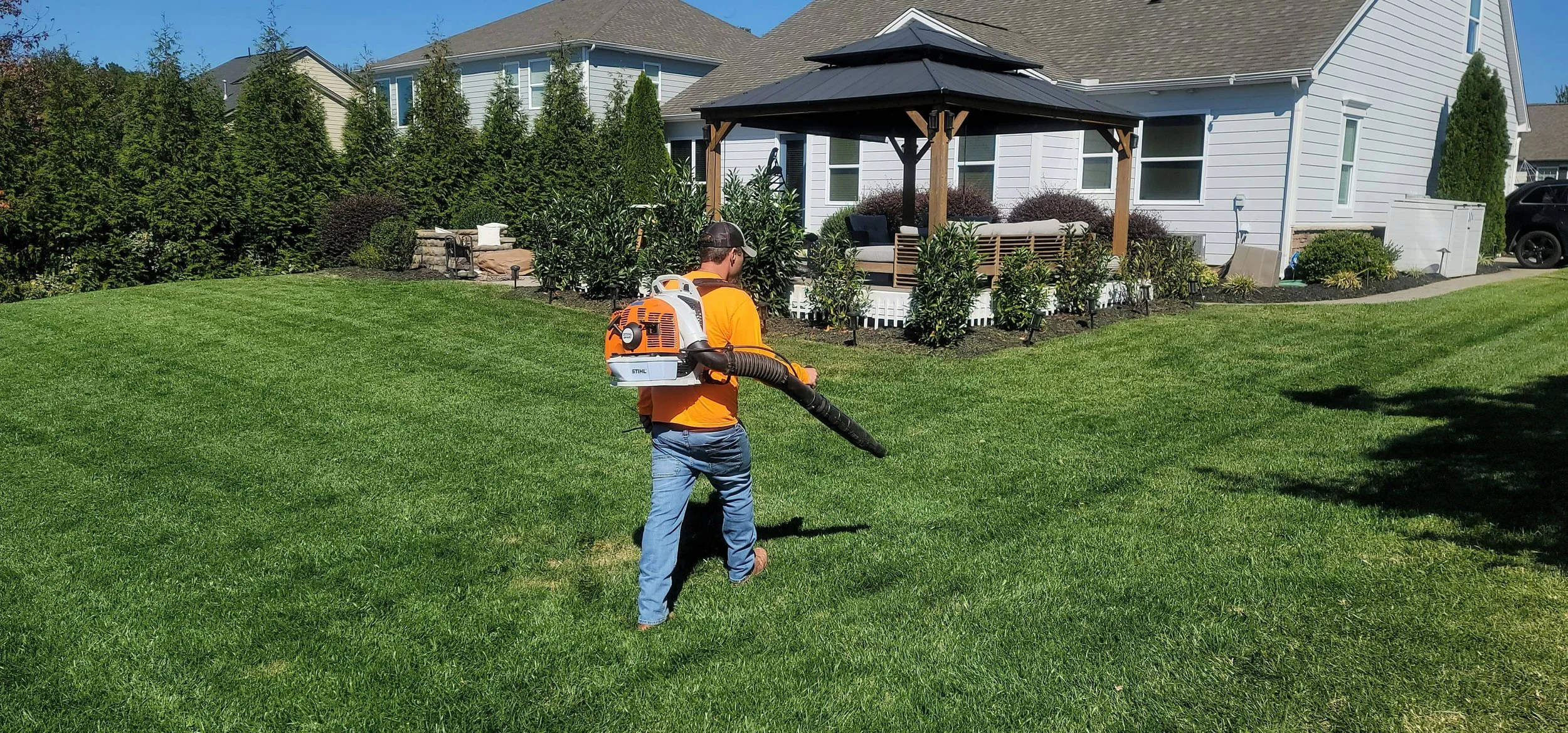
Lawn care sells in ninety seconds; a patio install sells over weeks of research, and one website has to serve both without collapsing into a single generic services page. Landscaping company website design works when the homepage leads with whatever earns the most revenue, service pages run past 400 words with real scope and pricing signals, and before-and-after photos replace stock imagery. Local search, not paid ads, drives most landscaping leads, which means a filled-out Google Business Profile, consistent name-address-phone details, and a handful of genuine town pages matter more than a bigger site. Homepage messaging should change four times a year to match the season, and snow removal earns its own permanent page in northern markets instead of a seasonal banner. The right build format, template, managed plan, or custom site, depends on how many services a company runs and how much the site needs to do, not on budget alone.
Lawn care and landscaping sell on two completely different timelines, and most landscaping company website design fails because it ignores that. Weekly mowing is a subscription decision someone makes in about ninety seconds from their phone. A patio and retaining wall install is a five-figure project a homeowner researches for weeks. One site has to serve both, and the way you do that is by splitting the paths early instead of dumping everything onto a single "Services" page.
Below is the build order we follow for green industry sites: structure first, then proof, then the seasonal mechanics that make a landscaping website useful in March and still useful in November. Each step is something you can act on this week, whether you're building it yourself or handing a brief to a designer.
Revenue split determines whether your homepage sells contracts or consultations
Decide which side of your business the homepage leads with. If seventy percent of your revenue is recurring mowing, fertilization, and cleanups, your hero section should point at a quote request for a seasonal contract. If you make your margin on hardscaping and installs, the hero belongs to your best project photo and a consultation request.
Then give each a real home in the navigation. Something like this:
Lawn Care: mowing, fertilization and weed control, aeration and overseeding, spring and fall cleanups
Landscaping: design consultation, planting and garden beds, mulch and edging, sod installation
Hardscaping: patios, walkways, retaining walls, fire pits, steps
Snow & Ice: plowing, sanding, commercial contracts (northern markets only)
That's four top-level service categories, each with its own child pages. Why not one page listing all of it? Because Google needs a specific page to rank for "retaining wall installation [your town]" and a homeowner comparing three contractors needs a page that talks only about retaining walls. A combined page ranks for nothing and answers no one. This is the same content-hierarchy principle behind the pages a service business site can't skip, applied to a trade where the service list runs long.
Service pages under 400 words won't rank and won't convert
A thin service page is a stub with a headline, three bullets, and a contact button. It won't rank and it won't convince. Give every service page the same four blocks:
What's included, spell out the scope. For fertilization: how many applications, what's in them, whether grub control is separate. Vagueness here is what makes people call your competitor instead.
What it costs, or how pricing works: a range, a starting point, or a clear explanation of the variables (lot size, slope, access). A page with zero pricing signal gets skipped by anyone with a budget in mind.
Photos of that specific service, not your general gallery. Retaining wall page, retaining wall photos.
The next step — a quote form or a phone number, sitting right there, not three scrolls away.
Write for the way people search. Nobody types "turf health solutions." They type "lawn aeration near me" and "how much does mulch installation cost." Use the plain words on the page and in the page title. If your copy keeps sliding into industry language, the walkthrough on writing website copy that sounds like your business has before-and-after examples worth borrowing.
Before-and-after photos from the same angle outperform stock imagery
Landscaping is one of the few trades where the work photographs beautifully, and most sites in this space waste that. Stock photos of an unnamed green lawn tell a homeowner nothing. A weedy, patchy side yard next to that same yard in July tells them everything.
A few rules that make galleries pull their weight:
Shoot before-and-after from the same spot, same angle, roughly the same time of day. Mismatched angles read as a different property.
Caption every project with the town and the scope: "Paver patio and fire pit, 400 sq ft, Cumberland." The town name is a local SEO signal and it tells a neighbor you work in their area.
Cap the gallery. Twenty strong projects beat two hundred phone snapshots, and a lighter page loads faster on a phone in a driveway.
Compress before uploading. Full-resolution DSLR files are the single most common reason a landscaping site crawls on mobile.
The photo is the estimate. Before anyone reads your pricing, they've decided whether your work looks like the yard they want.
If you've done a project that's unusually representative of your best work, give it a full write-up with the problem, the approach, and the result. That's a case study, and it does a job a gallery thumbnail can't. Our portfolio of client builds follows the same pattern: show the before, explain the decisions, show the after.
Separate quote forms by job type to reduce abandonment
One contact form for a $180 mowing signup and a $22,000 patio is a mismatch. The mowing customer abandons a long form; the hardscape customer wants to explain their project and gets frustrated by a three-field box.
Run two paths. Short form for recurring services: name, address, phone, service wanted. Four fields, done. Longer form for design-build: project type, rough budget range, timeline, photo upload, and a description field. The budget range question does real work here, letting you sort a serious $30k project from someone pricing a $900 planting bed before you spend a morning driving to the site.
Two more things that move more calls than any redesign:
Tap-to-call phone number in the header on mobile, visible without scrolling. Half your traffic is a homeowner standing outside looking at their lawn.
A stated response time. "We respond to quote requests within one business day" removes the fear that the form goes into a void. Only promise what you'll keep.
Photo upload deserves special mention. A homeowner who can send three pictures of their drainage problem gets a more accurate number from you, and you spend less time on site visits that go nowhere. Most form tools support file uploads. Turn it on.
Google Business Profile and local SEO outperform paid ads for landscaping
Landscaping is bought within a driving radius, so local search does more for you than anything else on the site. Start with the basics in order:
Claim and fill out your Google Business Profile. Correct service area, correct hours, service list, and fresh project photos posted through the season. This drives the map results your competitors are showing up in.
Match your name, address, and phone exactly across your site footer, your Business Profile, and any directory listing. Inconsistent formatting muddies the signal.
Create a page for each town you truly serve — not fifty. Pick the six or eight where you want more work, and write real content for each: which services you run there, a project or two from that town, local conditions you deal with.
Collect reviews with a direct link. Text the review link the same afternoon you finish a job, while the fresh-cut lawn is still the thing they're looking at.
Skip the trap of publishing twenty near-identical town pages with the place name swapped. Google treats those as thin duplicates and they can drag down pages that would have ranked. That mistake shows up alongside several others in our rundown of the SEO mistakes new business sites make, and it's the one landscapers hit most.
Homepage messaging should rotate with the season four times yearly
Here's the mechanic that separates a working landscaping website from a brochure: your homepage message should change four times a year, and it should take you ten minutes.
| Season | Homepage banner | Primary call to action |
|---|---|---|
| Late winter | Spring cleanup and mowing contracts open | Reserve your spot |
| Spring | Mulch, planting, patio design consults | Request an estimate |
| Midsummer | Hardscape installs, irrigation, lawn repair | Book a site visit |
| Fall | Leaf cleanup, aeration, snow contracts | Get on the schedule |
Build it as a single editable banner section and a swappable homepage headline so nobody has to rebuild a page in April. Add a waitlist form for the months you're booked solid. A homeowner who can't get on your schedule in June is a warm lead in August if you captured the email, and dead if you didn't.
Snow removal deserves its own permanent page in northern markets rather than a seasonal footnote. People search for plowing in October and they search again after the first storm. A page that exists year-round accumulates rankings; a banner that disappears in April starts from zero every fall.
Landscaping Company Website Design: Template, Managed Plan, or Custom Build, Choose Based on Scope, Not Budget
You have three realistic options, and the right one depends less on budget than on how much your site has to do.
Build it yourself on a template. Cheapest in dollars, costly in hours. A Squarespace template gets you a decent-looking site, but you're still writing every service page, shooting and compressing photos, setting up forms, and handling the local SEO work. Reasonable if you have off-season time and enjoy the work.
A managed monthly service. Good fit for a crew running three to eight services that wants the site handled and updated as the season shifts. Our Out-of-the-Box Web Design (see current pricing on the Out-of-the-Box Web Design page), covers design, copy, launch, hosting, foundational SEO, and unlimited updates while the plan is active, which means the seasonal banner swaps from Step 6 are a message to us instead of an afternoon of your time. If you want to see how the structure looks before deciding, the live design previews are worth a scroll.
A custom build. Worth it when you need something a template resists: a large searchable project portfolio, e-commerce for mulch or firewood delivery, a client portal, or integrations with your scheduling software. Custom Squarespace builds current pricing is listed on the Custom Web Design page and make sense once the site is a system rather than a storefront.
Still weighing the two? The template-versus-custom comparison lays out where each one breaks down. And if your current site is three years old and you're deciding whether to patch or rebuild, the scoring checklist in our redesign-versus-facelift breakdown will settle it faster than another round of guessing.
Whichever route you pick, aim to launch before your busy season starts, not during it. A site that goes live in February collects spring contracts. A site that goes live in June missed the window it was built for.
Frequently asked questions
How much does landscaping company website design cost?
Expect three tiers when it comes to landscaping company website design. A DIY template build runs the platform subscription plus your own time. A managed monthly plan spreads cost over the year with no large upfront payment, which fits seasonal cash flow well since you're paying the same in February as in July. A custom build is a one-time project cost starting around $4,500, plus ongoing hosting and support. Real ranges by provider type are broken down further in our guide to what a small business website costs.
Should I put pricing on my landscaping website?
Yes, at least a starting point or a range. Homeowners who see no pricing signal assume you're expensive or that you'll waste their time, and they call the competitor who published a number. For recurring services, a starting weekly rate works. For installs, a project range plus the variables that move it (square footage, material, access, grade) sets expectations without boxing you in.
How many pages does a landscaping website need?
Usually between twelve and twenty. That's a homepage, an about page, a gallery, a contact page, one page per service (typically six to ten), and a handful of town pages for the areas you want more work in. Fewer than ten and you're leaving search terms uncovered; more than thirty and you're probably duplicating thin town pages.
Do I need online booking or is a quote form enough?
A quote form is enough for most landscaping companies. Every job needs a look at the property before you can price it, so true instant booking rarely fits. The exception is recurring mowing in a market where you price by lot size — some companies do offer online signup for that one service while routing everything else through a quote request.
How long does it take to build?
A focused build with your photos and service list ready can go live in roughly three to four weeks. The delay is almost never design; it's waiting on photography and service details from the owner. Gather your before-and-after shots and write out what each service includes before the project starts and you'll cut the timeline substantially. Our week-by-week launch timeline shows what happens on which days.
Write your service list and sitemap before choosing templates or colors
Open a blank page and list every service you sell, then sort each one into maintenance or design-build. That list is your sitemap, and it's the piece most website projects for landscaping companies skip before jumping into templates and colors. Once it's written, the photography you need and the pages you owe Google become obvious.
Ready to hand off your landscaping company website design? Send us your service list and a few project photos and we'll map the site structure with you before anything gets designed.